Algae are an important component of a healthy ecosystem. They are a large group of diverse plant like organisms that use photosynthesis to produce their own food. Algae form the foundation of aquatic food webs, which support an abundance of life. They are the most important photosynthesizing organisms on Earth. They capture more of the sun's energy and produce more oxygen (a byproduct of photosynthesis) than all plants combined.
Some algae know as blue-green algae can produce toxins that are harmful to both humans and animals.
When conditions are favourable, the algae population can rapidly increase to form a large mass or scum called a bloom. Dense blue-green algae blooms may make the water look like bluish-green or green pea soup or turquoise paint; however, olive-green and red blooms have been reported. Take a cautious approach with blue-green algae blooms, although many varieties are harmless, some can produce toxins. Only laboratory analysis can determine whether or not a bloom is toxic.
August 04, 2015
June 30, 2015
Lake Plan Questionnaire
The DLPOA has been involved in the stewardship and enjoyment of Desert Lake since 1976, and is currently developing a Lake Plan for Desert Lake.
The Lake Plan is a public document that will report on the current condition of the lake and offer recommendations for the unimpaired enjoyment of the lake into the future. It will serve as a guide to users, property owners, township planners and councillors when making decisions that could affect the lake and its surroundings.
Work on the lake plan started more than five years ago. Progress has been slow, as almost all of the work is being carried out by volunteers, many of whom do not live at the lake year round. However, this year has seen great progress and we anticipate a great deal of public input into the plan so that it can be completed over the next year.
Here are the next steps:
We welcome your input. There are two ways you can participate:
The Lake Plan is a public document that will report on the current condition of the lake and offer recommendations for the unimpaired enjoyment of the lake into the future. It will serve as a guide to users, property owners, township planners and councillors when making decisions that could affect the lake and its surroundings.
Work on the lake plan started more than five years ago. Progress has been slow, as almost all of the work is being carried out by volunteers, many of whom do not live at the lake year round. However, this year has seen great progress and we anticipate a great deal of public input into the plan so that it can be completed over the next year.
Here are the next steps:
- Collection of information from the general public through distribution of a survey questionnaire.
- Open workshop to review survey findings and to develop recommendations
- Compilation of the information and preparation of a draft report
- Distribution and receipt of comments
- Final report and distribution
We welcome your input. There are two ways you can participate:
- Download a copy of the survey, fill it out, and drop it off to John Sherbino at 7901 Canoe Lake Road (adjacent to the Mitchell Creek bridge). There will be a sign on the mail box.
- Fill out the survey on-line (recommended).

December 01, 2014
Effect of Nutrients on Lake water
Have a look at this brief report which describes the effects of different levels of nutrients on water properties.
August 29, 2014
A Glimpse of Desert Lake History
Courtesy of Mary Clark
In 1922, William and Emma Pierce
(grandparents of Mary Clark and Bill Pierce) came from East Aurora, N. Y. to
fish at Desert Lake. They stayed at the fishing camp owned by Edmund and Edna
Page. It was located at the south end of the lake (across the road from present
day Lazy Acre).
The second floor of the fishing camp was sectioned into bedrooms by
hanging sheets between the beds. In the morning Edna cooked a massive breakfast
for all the guests. Each fishing group was supplied with a guide who rowed the
boat, and with enough pans, bread and vegetables for a shore dinner at noon,
augmented by the catch of the day. At suppertime, they all returned to the
Pages for a large dinner prepared by Edna.
During that time the Pierces’ favourite shore dinner site was the point
on which they built their cabin in 1925. It was the first cottage on Desert
Lake built for the purpose of fishing.

Looking from the Page’s Fishing Camp (at the south end of the lake) toward
present day Desert Lake Family Resort.


The bridge at the south end of Desert Lake


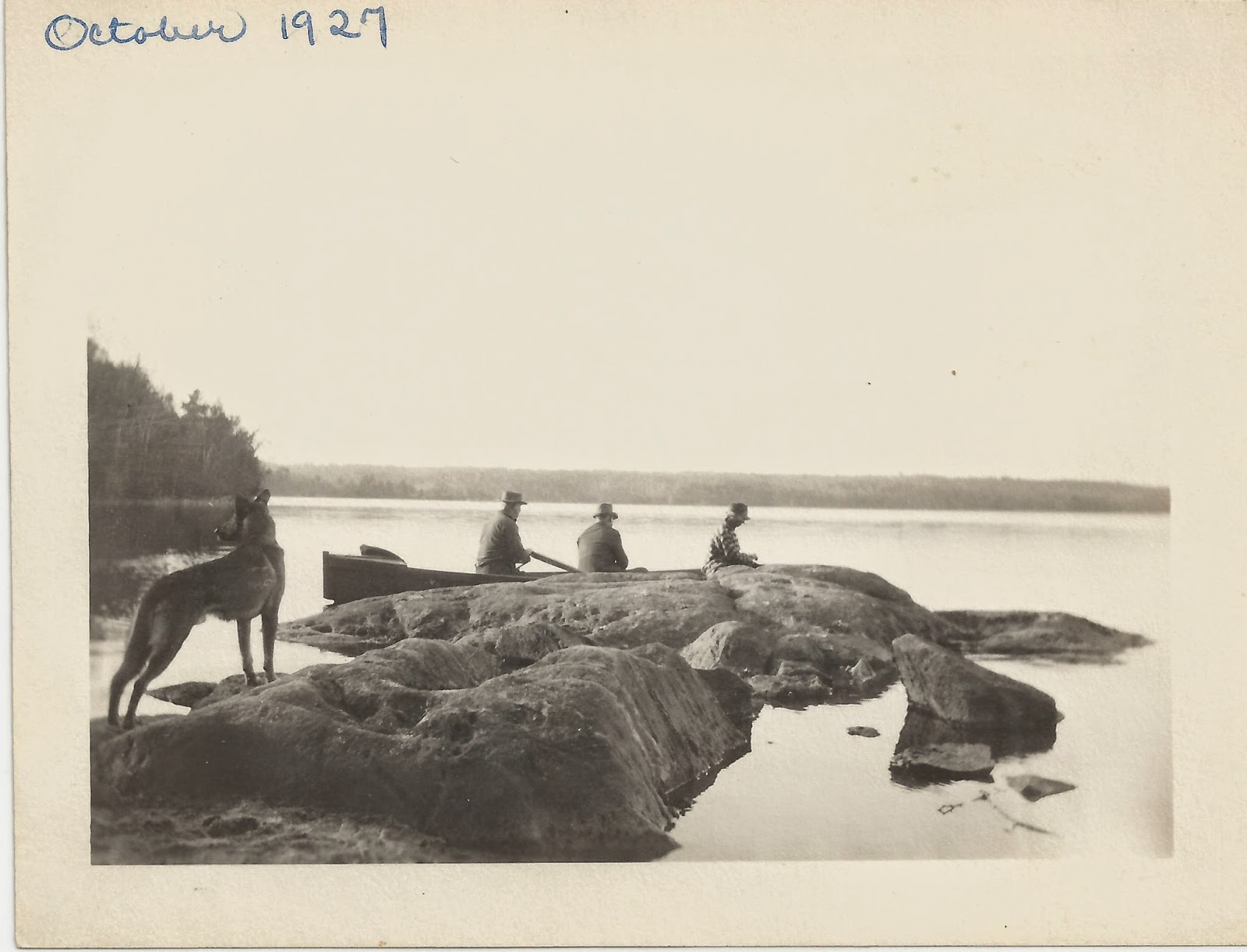
Because the water level in Desert Lake is controlled, these rocks off
the point of the Pierce cottage are now under water.
In 1948, Edison brought a team of carpenters, plumbers and electricians
from East Aurora. From July 15-20 they built an addition to the cottage,
installed a septic system, and electricity. The crew worked all morning, fished
in the afternoon and had all the beer they could drink.

The septic crew

The first septic tank
 In 1948, four bedrooms and a bathroom were added to the cottage.
Mary and Bill have been coming to Desert Lake for as long as they can
remember. Here they are with their mother, Dorothy.
August 12, 2014
August 01, 2014
Citizen Water Watch – Report a Sighting
 |
| Algae Bloom |
Whether you are an angler, boater, paddler, swimmer or any water enthusiast, we are asking you to report what you are seeing on the water that you use. Information about when, where and how often algal blooms and excessive aquatic plant growth are occurring will help develop future research on the causes of green algal blooms and excessive aquatic plant growth in local lakes and rivers. This information will also help us gain a greater understanding about the algae and aquatic plant growth in the waters that we cherish.
The first phase of the Citizen Water Watch website has been created as a part of The People, Aquatic Plants and Healthy Lakes: Finding the Balance in Eastern Ontario’s Lake Country Project. This project, being done by a collaborative group consisting of Friends of the Tay Watershed, Carleton University, Mississippi Valley Conservation Authority and Rideau Valley Conservation Authority, is being funded by the Ontario Trillium Foundation.
Algae and aquatic plants are a part of a healthy aquatic ecosystem but in excess they can put stress on other organisms in our lakes and rivers. Many local recreational water users have noted an increase in algae and aquatic plant growth, despite little observed change in nutrient concentrations which are often the cause of algal blooms and excessive aquatic plant growth. Reporting observations of algae and aquatic plants will help us better understand the excessive plant growth and find ways to improve aquatic environments.
To report a sighting go to www.citizenwaterwatch.ca, create an account and click on the “Report a Sighting” tab, fill out the form and hit submit. Knowing the name of the waterbody and nearest town where your observation took place as well as a picture will be helpful information to include.
For more information about this project, visit http://rvca.ca/programs/algae_watch/index.html or contact Kaitlin Brady, RVCA Algae Watch Project Coordinator at 613-692-3571 ext. 1154 or kaitlin.brady@rvca.ca or Mike Yee, RVCA Biology and Water Quality Manager at 613-692-3571 ext. 1176 or michael.yee@rvca.ca.
August 26, 2013
Fishing Derby on Desert Lake

If you were at the Lake on August 17 you may have noticed a Fishing Derby in progress. The DLPOA executive had been concerned about the environmental impact of this, and had sent a letter of concern to the Mayor. You can see that letter here. On the day of the event, Peter Hodson kept an eye on it and prepared the following report.
On Saturday, August 17, I dropped in on the Fishing Derby
and weigh station organized by the Land O’ Lakes Tourist Association at the
dock of the Desert Lake campgrounds. I
visited at 7:00 - 8am, again at 3:30-4:00 (when the weigh-in closed), and did a
'drive-through' at about 11 am.
Apparently, about 320 people had registered for the 5-lake
tournament, meaning a maximum of 160 boats in the tournament because the rules
required two fishermen per boat. With some boats carrying more than two,
there were likely fewer than 160 boats for the entire competition. This
translated to about 23-26 trucks/cars and trailers parked along the causeway on
Desert Lake, with presumably the rest at the other four lakes. The trailers completely filled the south side
of the causeway, and some were parked around the corner on the east side and in
front of the campground store on the west side, but overall, it was not
excessively crowded or busy in the morning.
Some of the trailers may have been non-derby fisherman - i.e., on the
lake for other reasons. Some of the fisherman blew past our cottage at
about 6:15 in the morning (not everyone has a Timex!), and there were a number
of boats that left after 7:00 am directly from the campground. Overall, I
suspect there were about 30 of the maximum 160 boats on our lake, which is
about right for an even split among 5 lakes.
From my experience, our part of the lake seemed a little busier than
normal, although not excessively so.

The make-up of the boats included aluminum open outboards (some of which looked a little over-loaded with 3 or 4 fishermen) to high-speed bass boats (with some at max speed), and a few inboard-outboard boats. One fellow I spoke to seemed typical - he was from Kingston, typically fished L. Ontario, the Rideau, Loughborough Lake, etc., and this was the first time he was fishing Desert Lake.
The winner of the tournament was a 5-pound largemouth bass caught by a young boy between 7 and 8 in the morning, and the 2nd and 3rd fish were about 4.5 and 3.8 lbs, respectively. Only 22-23 fish were actually weighed, in part because people arriving with fish might see the current posting of the largest fish, and simply not submit their fish. However, there was no last-minute anticipated rush at the weigh station, and the sense I had was that fishing was not very productive. In the afternoon, when the boats returned to shore, the participants were planning on going to Sharbot Lake for the prize-giving and draws for door prizes. As a consequence there was a bit of a line-up to use the launch ramp, but nothing dramatic - many of the boats had departed during the afternoon.
In terms of our main concerns, the most obvious issues were:
1. Fishing out the lake - don't think that would happen with this tournament, although the practice of the organizers was to dump all fish submitted off the end of the dock at the campground. I'm not sure what this means for fish caught elsewhere on the lake. I have not seen any information (but haven't looked that hard) on whether fish migrate back to their point of origin, or whether they encounter difficulties establishing a territory where dumped. It is interesting to note that "in a professional tournament" (one of the Land O’ lakes organizers I spoke to), hard core derby fishermen will fish a lake 2 to 5 days in advance of a tournament to identify the best areas to fish and to ensure they can re-capture big fish. Apparently, a fish once hooked is twice shy for several days, likely because it goes off feeding due to a sore mouth and physiological stress.
2. Invasive species. - when asked about boat cleaning to avoid transferring invasive species from lake to lake, the same Land O’ lakes organizer said that all participants had to follow OMNR guidelines (I don't think I heard the word 'rules') on actions to prevent transfers, but that it was up to the fishermen to take personal responsibility for these actions. At this tournament, there was NO oversight, advice, suggestions, or any other form of interactions by the organizers with fishermen about invasive species. So, it seems to be OK to organize a derby on any lake and create a risk of invasive species without being responsible for managing and minimizing that risk. Given that the people I spoke to also fished waters such as Lake Ontario and the Rideau, the risk would be significant.
3. Causeway and on-water traffic risks. There was no evidence of careless boat use or driving in the brief time I was at the causeway. In the morning, there were only one or two dog-walkers, and the scene was quite quiet. In the afternoon, however, there was a significant crowd on the beach, with at least 30 small children in the water or on the 'beach' at the edge of the road, and probably that many adults. I watched one truck backing a trailer into the lake to retrieve a derby boat, and while the truck obstructed the roadway, there were vehicles in both directions stopped, and at least 20 adults and children within 50 feet of the vehicle. An OPP truck and trailer were present at the 11 am drive-by, indicating they had fulfilled their promise to keep an eye on things (I was very impressed with their response to being copied the DLPOA letter to Council). Nevertheless, there were no derby organizers on-site to direct traffic, act as a look-out for launching and retrieving boats, or to advise drivers about the risks to swimmers (on-water) or beach users (traffic on the causeway). Again, it seems to be OK to organize an event that creates significant risks of traffic accidents without being responsible for managing and minimizing those risks.
Overall, I thought the derby was a low-key affair, but would advise that the Association oppose any future Derbies unless there are specific actions taken to manage the ecological and safety risks. There are benefits for sponsors, organizers and participants, but many of the potential long-lasting and significant costs are borne by the non-participants, i.e., by the property owners and casual users who value the high quality of Desert Lake.
The original letter from the DLPOA to the Council of S. Frontenac generated feedback from the CAO of S. Frontenac. The letter was received, was part of the package at the Council meeting on the Tuesday before the derby, and was referred to staff for responses, but I have not yet received a formal reply. I will keep you informed.

The make-up of the boats included aluminum open outboards (some of which looked a little over-loaded with 3 or 4 fishermen) to high-speed bass boats (with some at max speed), and a few inboard-outboard boats. One fellow I spoke to seemed typical - he was from Kingston, typically fished L. Ontario, the Rideau, Loughborough Lake, etc., and this was the first time he was fishing Desert Lake.
The winner of the tournament was a 5-pound largemouth bass caught by a young boy between 7 and 8 in the morning, and the 2nd and 3rd fish were about 4.5 and 3.8 lbs, respectively. Only 22-23 fish were actually weighed, in part because people arriving with fish might see the current posting of the largest fish, and simply not submit their fish. However, there was no last-minute anticipated rush at the weigh station, and the sense I had was that fishing was not very productive. In the afternoon, when the boats returned to shore, the participants were planning on going to Sharbot Lake for the prize-giving and draws for door prizes. As a consequence there was a bit of a line-up to use the launch ramp, but nothing dramatic - many of the boats had departed during the afternoon.
In terms of our main concerns, the most obvious issues were:
1. Fishing out the lake - don't think that would happen with this tournament, although the practice of the organizers was to dump all fish submitted off the end of the dock at the campground. I'm not sure what this means for fish caught elsewhere on the lake. I have not seen any information (but haven't looked that hard) on whether fish migrate back to their point of origin, or whether they encounter difficulties establishing a territory where dumped. It is interesting to note that "in a professional tournament" (one of the Land O’ lakes organizers I spoke to), hard core derby fishermen will fish a lake 2 to 5 days in advance of a tournament to identify the best areas to fish and to ensure they can re-capture big fish. Apparently, a fish once hooked is twice shy for several days, likely because it goes off feeding due to a sore mouth and physiological stress.
2. Invasive species. - when asked about boat cleaning to avoid transferring invasive species from lake to lake, the same Land O’ lakes organizer said that all participants had to follow OMNR guidelines (I don't think I heard the word 'rules') on actions to prevent transfers, but that it was up to the fishermen to take personal responsibility for these actions. At this tournament, there was NO oversight, advice, suggestions, or any other form of interactions by the organizers with fishermen about invasive species. So, it seems to be OK to organize a derby on any lake and create a risk of invasive species without being responsible for managing and minimizing that risk. Given that the people I spoke to also fished waters such as Lake Ontario and the Rideau, the risk would be significant.
3. Causeway and on-water traffic risks. There was no evidence of careless boat use or driving in the brief time I was at the causeway. In the morning, there were only one or two dog-walkers, and the scene was quite quiet. In the afternoon, however, there was a significant crowd on the beach, with at least 30 small children in the water or on the 'beach' at the edge of the road, and probably that many adults. I watched one truck backing a trailer into the lake to retrieve a derby boat, and while the truck obstructed the roadway, there were vehicles in both directions stopped, and at least 20 adults and children within 50 feet of the vehicle. An OPP truck and trailer were present at the 11 am drive-by, indicating they had fulfilled their promise to keep an eye on things (I was very impressed with their response to being copied the DLPOA letter to Council). Nevertheless, there were no derby organizers on-site to direct traffic, act as a look-out for launching and retrieving boats, or to advise drivers about the risks to swimmers (on-water) or beach users (traffic on the causeway). Again, it seems to be OK to organize an event that creates significant risks of traffic accidents without being responsible for managing and minimizing those risks.
Overall, I thought the derby was a low-key affair, but would advise that the Association oppose any future Derbies unless there are specific actions taken to manage the ecological and safety risks. There are benefits for sponsors, organizers and participants, but many of the potential long-lasting and significant costs are borne by the non-participants, i.e., by the property owners and casual users who value the high quality of Desert Lake.
The original letter from the DLPOA to the Council of S. Frontenac generated feedback from the CAO of S. Frontenac. The letter was received, was part of the package at the Council meeting on the Tuesday before the derby, and was referred to staff for responses, but I have not yet received a formal reply. I will keep you informed.
August 07, 2013
July 02, 2013
Lake Association Meeting
One of the initiatives that the executive has undertaken this year is to reach out to other Lake Associations to see if there is any interest to share concerns and to work cooperatively to preserve our lake environment.
We invited half dozen associations from neighbouring lakes to
join us. We had good response, but only
three were able to join us on June 15, 2013 – Sydenham, Loughborough and Gould
Lakes.
Through discussions
there was agreement that the Lake Associations share the goal of preserving the
environmental quality in and around the lakes.
In
order to achieve this goal, we need to know what the current conditions
are. It would be helpful to monitor lake
conditions by measuring the same things in the same way – on land and in the
water.
Additionally,
we need to identify the environmental threats to our lakes.
Lastly,
it was agreed that we could coordinate the communication of our concerns.
We
agreed to expand our contacts with other lake associations in South Frontenac
and to discuss our Lake Monitoring Plan with Cataraqui Region Conservation
Authority to see if they can coordinate and support our activities to monitor
lake water quality.
South
Frontenac has invited all Lake Associations to meet in August. We will try to meet with the other
associations before then.
Minutes
of the June 15 meeting are available here.
Rik Saaltink, President DLPOA
April 05, 2013
Beavers and Us
The Stewardship Councils of eastern Ontario are hosting an all-day workshop on beavers. The poster and program for the Monday, April 22 workshop in Perth are available here. The program will be of great interest to rural landowners and all are welcome.
Solutions for beaver management will be shared, and excellent speakers are lined up, on such topics as:
Effects of Beaver Activity on Groundwater Far From the Beaver Ponds
Successful Beaver Management: Tools and Plans by Michel Leclair (of Nature of Things program: The Beaver Whisperers www.cbc.ca/natureofthings/beaverwhisperer/
Participants need to register, for lunch only. The program is also available at www.specialplaces.ca/beaverworkshop
September 13, 2012
Climate Change – How to Build Resiliency in our Lakes
The 11th Annual Lake Links workshop will be held on Saturday October 20, 2012
at the Perth Civitan Hall.
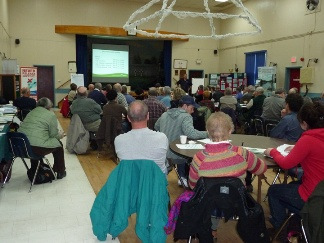
Are you wondering what changes we will see in Eastern Ontario lakes in response to climate change? Are you interested in learning how we as a community can build resiliency in our lakes as our climate continues to change?Objective of the Day: Provide a general discussion of climate change trends in Ontario focusing on 4 themes1. Social2. Environmental3. Recreational/Economical 4. What can we do about itTopics that will be discussed include: provincial perspective on dealing with climate change and the adaptation strategy, invasive species, shift in vegetation communities, weather events, general changes on the landscape, water levels, water quality and how we can take action.Expert speakers will discuss relevant decision-making tools and attendees will gain in-depth information at panel Q & A sessions. You will have the opportunity to network with community members and representatives from neighboring lake groups, municipalities, conservation authorities, stewardship councils, government and non-government organizations.
We will explore how we can adapt on a practical individual and local level.
Who will be Interested?Lake Association Members, Lake Stewards, Municipal Staff and Politician, Scientists and Local Government and Non-Government Organizations
July 09, 2012
2012 Annual General Meeting
Sunday,
August 5, 2012
Snug Harbour Resort 10:30
am
Thanks to the hospitality of the Canvin family
we will be holding our annual meeting and potluck lunch once again at Snug
Harbour.
Bring chairs and a contribution to the
lunch – beverages will be provided.
If you have any South
Frontenac garbage tags that you will not be using, bring them along to the
meeting. They will help the Canvins in
dealing with the garbage from Snug Harbour residents
AGENDA
Welcome
Approval of Agenda
Approval of minutes of AGM 2011
Matters arising from minutes
Treasurer’s report – Mary Lapeer
Auditor’s report
President’s report – Angus Ross
Motion to amend the by-laws*
Election of New Executive
New Business Lake Management Plan
Association of Lake Associations
Approval of Agenda
Approval of minutes of AGM 2011
Matters arising from minutes
Treasurer’s report – Mary Lapeer
Auditor’s report
President’s report – Angus Ross
Motion to amend the by-laws*
Election of New Executive
New Business Lake Management Plan
Association of Lake Associations
Youth Summer Activities
|
* In view of the difficulty in getting written response from members
it is proposed that section 5(b) of By-Law 1 regarding permission from
members for expenditures from the legal fund be amended as follows:
5 (b) a
majority vote of the mailed in or emailed and recorded ballots after all full
members have been notified and given a reasonable time to vote.
|
July 06, 2012
For Desert Lake Kids
FOR
DESERT LAKE KIDS
SPONSORED
BY
THE
DESERT LAKE PROPERTY OWNERS' ASSOCIATION
Saturday August 4, 2012 from 10:00am
to 11:30am
Led by Anne Robertson of the
Kingston Junior Field Naturalists, participants will roam the fields, woods,
ponds and shore of a Mitchell Creek
property in search of tiny life.
It's an opportunity to meet your
neighbours while making new seasonal and year-round friends. There is no fee
for the experience and membership in the association is not required. If you
live on the lake come and have some fun
and Kids, you can even bring a
parent!
For
further information and to register please call
Kathleen
Laird at 613-634-0425 evenings
or
kathleen.ruth.laird@gmail.com
July 05, 2012

June 07, 2012
Water Quality and Fish Survey
Water Quality and Fish Survey
The Ministry of Natural Resources has published a report on their work done in 2009. You can view or print it here. More about this in the newsletter, coming out in early July.
May 18, 2012
2012 Ecoadventure Camp
Queen’s University is running an eco-adventure day camp for kids 10 – 14 years old www.ecoadventurecamp.ca .
The camp is run at the University’s Elbow Lake facility, just off Division St near Loughborough Lake. There are six one week sessions, starting July 3rd, and there is a discount if you provide transportation for your own campers. See the details in the attached files – brochures will be available at the Snug Harbour Campground Office. To connect with camp staff, contact Kait Paisic, camp Director, or Lauren Johns, Associated Director, at qubsecoadventure@gmail.com
April 19, 2012
More on Drinking Water Policies
Earlier this month I posted a note about work going on
in the Mississippi-Rideau region to develop a plan for protecting rivers and
groundwater. A similar activity is going on in our area. Find out more about
how it might affect us by going here.

April 09, 2012
Drinking Water Policies
Here is an announcement about what is going on north of here on developing policies for protecting groundwater. Although this does not affect us directly, it raises issues that we will also have to deal with in our area.
Comment on Draft Drinking Water Policies
Draft policies have been developed to help keep contaminants out of rivers and groundwater where they are a source of municipal drinking water. Such preventative measures will help make municipal drinking water even safer. Review the draft policies and submit comments by May 4, 2012.
Policies can be found in the draft Mississippi-Rideau Source Protection Plan. This Plan contains a series of voluntary and mandatory policies that encourage good stewardship, require additional oversight or risk reduction measures where necessary and prohibit certain activities from being established in the future. Funding is also available until December 1, 2012 to help property owners proactively address activities on their property that may be subject to these policies in the future.
View the Draft Plan
· Online at www.mrsourcewater.ca
· At our Conservation Authority Offices:
o Mississippi Valley Conservation – 4175 Highway 511, Lanark
o Rideau Valley Conservation Authority – 3889 Rideau Valley Dr, Manotick
· At our open houses (details below)
· Request a DVD copy (contact information below)
Attend an Open House (all open houses are 4 pm to 8 pm)
· April 19 – Rideau Valley Conservation Authority (3889 Rideau Valley Drive, Manotick)
· April 24 – Carleton Place Arena (75 Neelin Street, Carleton Place)
· April 26 – Smiths Falls Memorial Centre (75 Cornelia Street, Smiths Falls)
Where Policies Would Apply
There are 11 locations in the Mississippi-Rideau region where rivers or groundwater are a source of municipal drinking water – these are the areas where policies will apply and funding is available:
| · Almonte · Carleton Place · Carp · Kemptville | · Merrickville · Munster · Perth · Richmond | · Smiths Falls · Urban Ottawa · Westport |
What Activities Policies Would Address
The following types of activities could be subject to policies in the areas listed above. These are activities that must be carefully managed near sources of drinking water to prevent contamination.
| · Waste disposal sites · Municipal sewage works · Septic systems · Pesticides · Commercial fertilizer | · Nutrients (manure, biosolids, livestock) · Heating oil (furnace tanks) · Liquid fuel (gas stations, yard tanks) · Road salt and snow storage · Chemicals (DNAPLs and organic solvents) |
More information: Sommer Casgrain-Robertson
Co-Project Manager, Mississippi-Rideau Source Protection Region
613-692-3571 or 1-800-267-3504
ext 1147
sommer.robertson@mrsourcewater.ca
www.mrsourcewater.ca
November 25, 2011
DLPOA 2011 Annual Meeting and Picnic
Desert Lake Property Owners’ Association
Annual General Meeting: Sunday July 31st, 2011
Minutes of the Meeting
-Call to order at 10.10 – Angus Ross – approximately 55 attendees
-Executive present --- Angus Ross, Mary Lapeer, Peter Hodgson, John Bonner, John Sherbino
-Angus welcomed our Guest Speaker Kim Goodman from the Center for Sustainable Watersheds and councilors McDougall and Vandewal
-Howard Wintel motioned acceptance of the agenda, seconded by Lucille Groll – carried
-Matters pertaining to minutes – none
Income down slightly year over year ($1295 in 09/10 and $1096 in 10/11
Total Assets up from $43,075 to $44334
-Auditor’s Report – Steve Maybury indicated that ‘All is in order’
Motion by John Sherbino to accept the Treasure’s report as presented, seconded by Howard Wintle --- carried
Rick Paudyn and Judy Curtain have resigned their executive positions
2011/2012 Executive
President – Angus Ross
Past President – John Sherbino
Vice President – TBD (Acting Mary Lapeer)
Secretary – John Bonner
Treasurer – Mary Lapeer
Directors – Peter Hodgson, Don Robinson
We need to promote a program to encourage ex-members to stay associated
-letters concerning high water levels have been sent to Fortis and the Conservation Authority. Fortis have responded that current spring levels are not exceptional
-Lake Management Plan – current direction is to complete the work that has been started
-consider hiring a planner who will give us an opinion on residential/commercial properties on the lake with a view to a comprehensive lake plan covering all aspects of care
-Kim indicated the Center could work with us to create a shoreline inventory of all site and subsequent Shoreline Action Checklist and recommendations and a complete schedule of work for what we expect
-motion to authorize an initial expenditure of $3000 to start the process, and accept additional tax deductable donations from the membersip made by Elaine Harvey, seconded by Rosalie Wintle ---- carried
-Angus advised the attendees that we need a volunteer to lead the Lake Management System Program, and that if anyone was interested, to contact him or John S.
-Rob Canvin indicated that he had maps from previous shoreline inventories
-after further discussion concerning Fortis actions (high water levels) that are potentially harming the lake, Lucille made a motion that we obtain a professional opinion regarding lake water levels on overall health of the lake, and impact of Fortis maintaining high levels above the normal acceptable high water levels
Motion was not seconded or voted on, however it was agreed that the executive should discuss at future meetings and take forward if deemed appropriate.
-councillor MacDougall extended an invitation for anyone of the executive or members to attend the weekly council meetings.
Meeting Adjourned at 12.10 PM and a pot luck lunch was enjoyed by all
Subscribe to:
Posts (Atom)